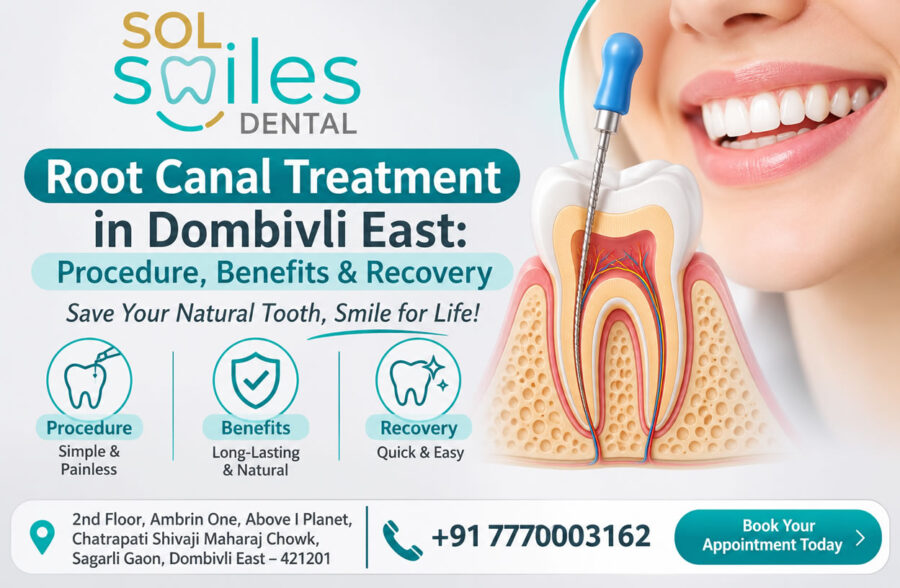
Are you experiencing severe tooth pain, sensitivity to hot or cold foods, or discomfort while chewing? These symptoms may indicate an infection or damage inside your tooth. In such situations, Root Canal Treatment (RCT) may help remove the infection and preserve your natural tooth.
If you are looking for Root Canal Treatment in Dombivli East, understanding the procedure, benefits, treatment duration and aftercare can help you make an informed decision.
At Sol Smiles Dental Clinic, Dombivli East, patients can consult a dental professional for an examination, diagnosis and personalised treatment plan based on their dental condition.
Table of Contents
7 Signs You May Need Root Canal Treatment
Root Canal Treatment Procedure: Step by Step
Is Root Canal Treatment Painful?
Root Canal Treatment Cost in Dombivli East
Benefits of Saving Your Natural Tooth
Do You Need a Dental Crown After RCT?
What to Eat After Root Canal Treatment?
Root Canal vs Tooth Extraction
When Should You Visit a Dentist?
What Is Root Canal Treatment?
Root Canal Treatment, commonly known as RCT, is a dental procedure used to treat infection or inflammation in the pulp (the soft tissue inside a tooth containing nerves and blood vessels).
When the pulp becomes infected due to deep tooth decay, cracks, injury or repeated dental procedures, the dentist may recommend root canal treatment to save the affected tooth.
During the procedure, the infected or inflamed pulp is removed, the inside of the tooth is cleaned and shaped, and the root canals are filled and sealed.
A suitable dental restoration, such as a crown, may also be recommended to protect the treated tooth.
In simple words: Root canal treatment helps remove infection from inside a tooth while preserving the natural tooth structure whenever possible.
7 Signs You May Need Root Canal Treatment
Not every toothache requires an RCT. However, certain symptoms may indicate damage or infection inside the tooth.
Here are seven common warning signs:
1. Persistent Toothache
Continuous or recurring tooth pain, particularly when it interferes with eating, sleeping or daily activities, should be evaluated by a dentist.
2. Sensitivity to Hot and Cold Foods
If you experience prolonged sensitivity after consuming hot tea, coffee or cold drinks, it may indicate inflammation or damage to the tooth pulp.
3. Pain While Chewing
Pain or discomfort when biting or chewing food may indicate infection, inflammation or a crack in the tooth.
4. Swelling Around the Gums
Swelling, tenderness or a small pimple-like bump near the affected tooth may indicate a dental infection or abscess.
5. Darkening or Discolouration of the Tooth
A tooth that becomes greyish or darker than neighbouring teeth may have experienced internal damage or pulp injury.
6. Deep Tooth Decay
Untreated cavities can gradually reach the inner pulp of the tooth, potentially resulting in infection and the need for root canal treatment.
7. Tooth Pain After Dental Injury
A tooth affected by an accident, fall or physical injury may develop pulp damage, sometimes even without immediate pain.
Important: These symptoms do not automatically mean you need an RCT. A dental examination and appropriate diagnostic tests are necessary to determine the correct treatment.
How Is Root Canal Treatment Performed? Step-by-Step Procedure
Many patients feel anxious when they hear the words root canal treatment. However, modern RCT is generally performed under local anaesthesia to make the procedure comfortable.
Here is what you can expect during treatment.
Step 1: Dental Examination and Diagnosis
The dentist examines the affected tooth, understands your symptoms and may recommend dental X-rays to assess the roots and surrounding tissues.
Step 2: Local Anaesthesia
Local anaesthesia is administered to numb the affected area and minimise discomfort during the procedure.
Step 3: Removing the Infected Pulp
The dentist creates an opening in the tooth and carefully removes the infected or inflamed pulp tissue.
Step 4: Cleaning and Shaping the Root Canals
The root canals are cleaned, disinfected and shaped to remove infected material and prepare them for filling.
Step 5: Filling and Sealing
The cleaned canals are filled with a suitable dental material and sealed to help prevent reinfection.
Step 6: Final Restoration or Dental Crown
Depending on the condition and location of the tooth, the dentist may recommend a permanent filling or dental crown to restore its strength, shape and function.
The exact procedure and number of appointments depend on the complexity of the case and the tooth’s condition.
Is Root Canal Treatment Painful?
This is one of the most frequently asked questions by patients.
Modern root canal treatment is generally comfortable because it is performed using local anaesthesia. The purpose of the procedure is to remove the infected or inflamed pulp that may be causing tooth pain.
You may experience some tenderness or mild discomfort for a few days after treatment. This usually improves as the surrounding tissues recover.
If you are anxious about dental procedures, discuss your concerns with your dentist before starting treatment.
How Many Visits Are Required for Root Canal Treatment?
The number of appointments depends on several factors:
- Which tooth requires treatment.
- The extent of infection or inflammation.
- The complexity and number of root canals.
- Whether additional treatment is required.
- How the tooth responds to the initial procedure.
Some cases may be completed in a single appointment, while others may require multiple visits.
Your dentist will recommend the appropriate treatment schedule after examining your tooth.
Root Canal Treatment Cost in Dombivli East
One common concern among patients is the cost of root canal treatment.
The cost of RCT in Dombivli East may vary depending on the following factors:
- Type and location of the affected tooth.
- Complexity of the root canal anatomy.
- Severity of infection.
- Number of appointments required.
- Type of final restoration or dental crown.
- Additional diagnostic or dental procedures, if required.
For an accurate estimate, it is important to have your tooth examined by a dentist.
At Sol Smiles Dental Clinic, you can discuss your dental concerns and understand the recommended treatment options and associated costs during your consultation.
Why Is Saving Your Natural Tooth Important?
Whenever possible, preserving your natural tooth is generally preferable to removing it.
Root canal treatment may offer several benefits:
- Helps remove infection from inside the tooth.
- Preserves your natural tooth structure.
- Helps restore normal chewing function.
- Avoids extraction when the tooth can be saved.
- Maintains the natural alignment of surrounding teeth.
- May reduce the need for tooth replacement procedures.
The suitability of RCT depends on the remaining tooth structure, surrounding bone and overall dental condition.
Do You Need a Dental Crown After Root Canal Treatment?
A dental crown is often recommended after root canal treatment, particularly for back teeth such as molars and premolars.
This is because teeth that have undergone RCT may have significant loss of tooth structure due to decay, previous fillings or the treatment itself.
A dental crown can help:
- Protect the remaining tooth structure.
- Restore the tooth’s shape and function.
- Improve chewing ability.
- Reduce the risk of fracture in a weakened tooth.
However, not every root canal-treated tooth necessarily requires a crown. Your dentist will recommend the appropriate restoration based on the tooth’s condition and location.
What to Eat After Root Canal Treatment?
Taking care of your treated tooth is important during recovery.
Foods You Can Consider
- Soft rice and dal.
- Khichdi.
- Cooked vegetables.
- Curd and yoghurt.
- Soft fruits.
- Soups.
- Other easily chewable foods.
Foods to Avoid Temporarily
- Very hard foods.
- Sticky candies and chewing gum.
- Hard nuts and seeds.
- Excessively hot or cold foods if you experience sensitivity.
- Chewing hard food on the treated tooth, especially while it has a temporary filling.
Follow your dentist’s instructions regarding eating and chewing after treatment.
How to Take Care of Your Tooth After RCT
Good oral hygiene and timely follow-up help maintain the health of your treated tooth.
Follow these recommendations:
- Brush twice daily using a soft-bristled toothbrush.
- Floss regularly to clean between your teeth.
- Avoid chewing hard foods on a tooth with a temporary restoration.
- Complete the recommended permanent filling or crown treatment.
- Attend follow-up appointments as advised.
- Contact your dentist if you experience increasing pain, swelling or other unusual symptoms.
Remember, a root canal-treated tooth still needs regular dental care.
Root Canal Treatment vs Tooth Extraction: Which Is Better?
Patients sometimes wonder whether removing an infected tooth is easier than undergoing root canal treatment.
The right decision depends on the condition of the tooth.
| Root Canal Treatment | Tooth Extraction |
|---|---|
| Helps preserve the natural tooth | Removes the affected tooth |
| Retains the natural tooth position | Leaves a gap unless replaced |
| Requires cleaning and sealing root canals | Requires healing of the extraction site |
| May require a dental crown | May require an implant, bridge or other replacement |
| Suitable when the tooth can be restored | Considered when the tooth cannot be saved or extraction is otherwise indicated |
Which option should you choose?
If the tooth is restorable, root canal treatment may be recommended to preserve it. If the tooth is severely damaged or cannot be restored, extraction may be necessary.
Always consult a dentist before deciding.
When Should You Visit a Dentist?
Do not ignore persistent tooth pain or symptoms of dental infection.
Seek prompt dental evaluation if you experience:
- Severe or persistent toothache.
- Swelling around the gums or face.
- Pus or discharge near a tooth.
- Pain while chewing.
- Fever associated with dental pain.
Facial or neck swelling accompanied by difficulty breathing or swallowing requires immediate emergency medical attention.
Early diagnosis may help prevent the infection from becoming more serious.
Looking for Root Canal Treatment in Dombivli East?
If you are experiencing tooth pain, sensitivity or discomfort while chewing, getting your tooth examined is an important first step.
Sol Smiles Dental Clinic provides dental care in Dombivli East, including root canal treatment and other general, restorative and cosmetic dental services.
The dental team can assess your condition, explain the available treatment options and guide you through the recommended procedure.
Whether you are looking for a dentist for tooth pain, an RCT consultation or advice about saving an infected tooth, schedule a dental appointment to understand your treatment needs.
Visit Sol Smiles Dental Clinic
- Location: 2nd Floor, Ambrin One, Above I Planet, Chatrapati Shivaji Maharaj Chowk, Sagarli Gaon, Dombivli East – 421201.
- Phone / Appointment: +91 77700 03162.
- Website: https://solsmiles.com/
Book your dental consultation today and take the first step towards better oral health.
Frequently Asked Questions About Root Canal Treatment in Dombivli East
1. Where can I get Root Canal Treatment in Dombivli East?
You can consult Sol Smiles Dental Clinic, located at Ambrin One near Gharda Circle, Dombivli East, for a dental examination and root canal treatment consultation.
2. Is Root Canal Treatment painful?
Root canal treatment is generally performed under local anaesthesia, making the procedure comfortable for most patients. Mild tenderness may occur after treatment.
3. How much does root canal treatment cost in Dombivli East?
The cost depends on the affected tooth, treatment complexity, number of appointments and type of final restoration. Consult your dentist for an individual estimate.
4. Can a root canal be completed in one sitting?
Yes, some root canal treatments can be completed in a single appointment. However, multiple visits may be necessary depending on the infection and complexity of the tooth.
5. How long does a root canal-treated tooth last?
A properly treated and restored tooth can last many years. Its longevity depends on oral hygiene, remaining tooth structure, the quality of restoration and regular dental check-ups.
6. Is a dental crown compulsory after root canal treatment?
Not in every case. A crown is often recommended for teeth with significant structural damage, particularly back teeth. Your dentist will assess whether it is necessary.
7. What happens if I delay root canal treatment?
An untreated infected tooth may develop worsening pain, swelling, an abscess or damage to surrounding tissues. Early dental evaluation is recommended.
8. Can I eat normally after root canal treatment?
You can gradually return to your normal diet as advised by your dentist. Avoid chewing hard or sticky foods on the treated tooth until its permanent restoration is completed.
9. Can an infected tooth be saved without extraction?
In many cases, root canal treatment can preserve an infected tooth. However, the decision depends on the amount of remaining healthy tooth structure and the extent of damage.
10. How can I book a root canal consultation at Sol Smiles Dental Clinic?
You can call or WhatsApp Sol Smiles Dental Clinic at +91 77700 03162 or visit https://solsmiles.com/ to enquire about an appointment.